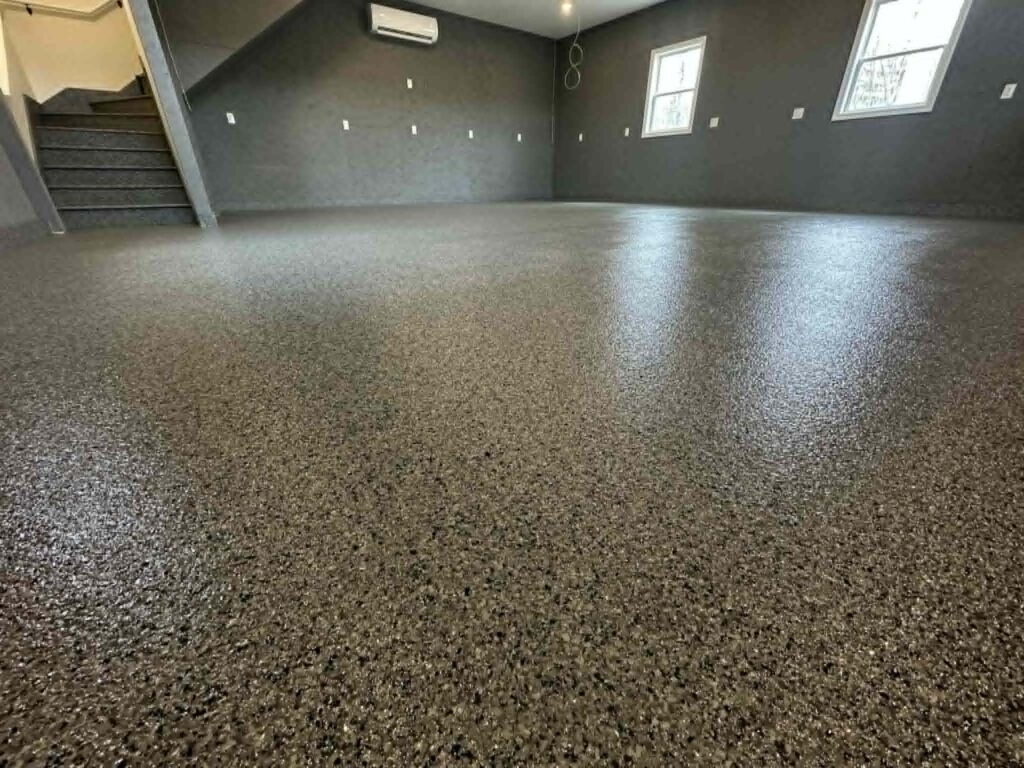
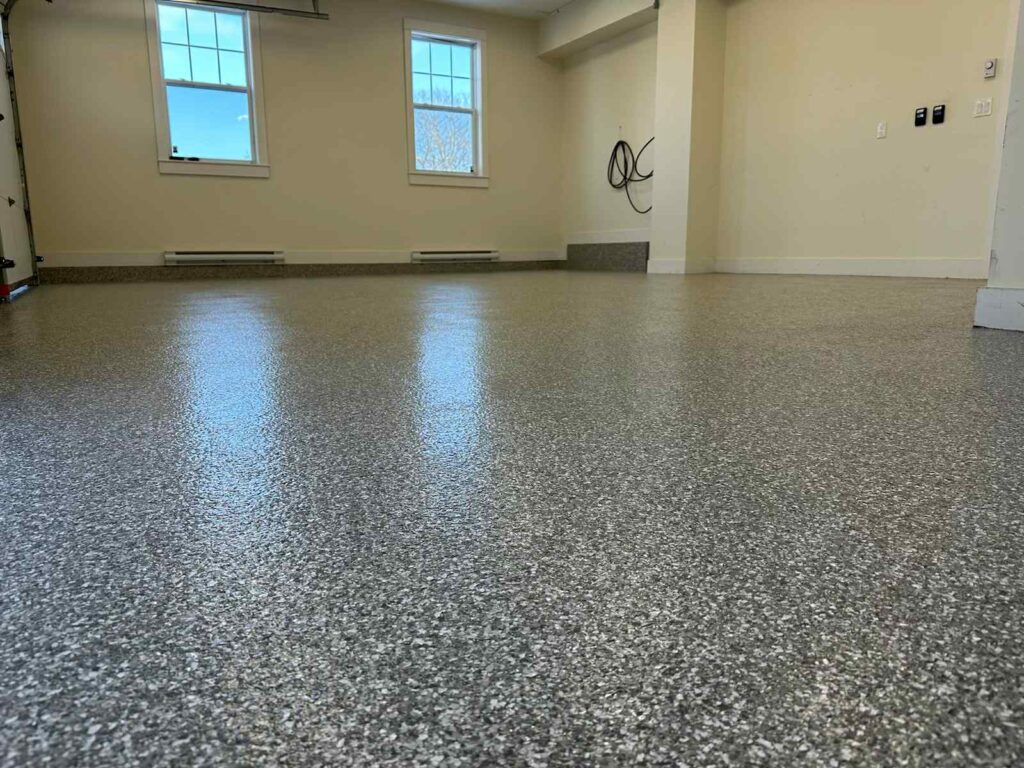
Nova Scotia winters are tough on garage floors. Between road salt tracked in on your tires, slush that refreezes overnight and a slab that expands and contracts with every cold snap, an ordinary coating doesn’t stand a chance. That’s exactly the problem polyaspartic coatings were designed to solve.
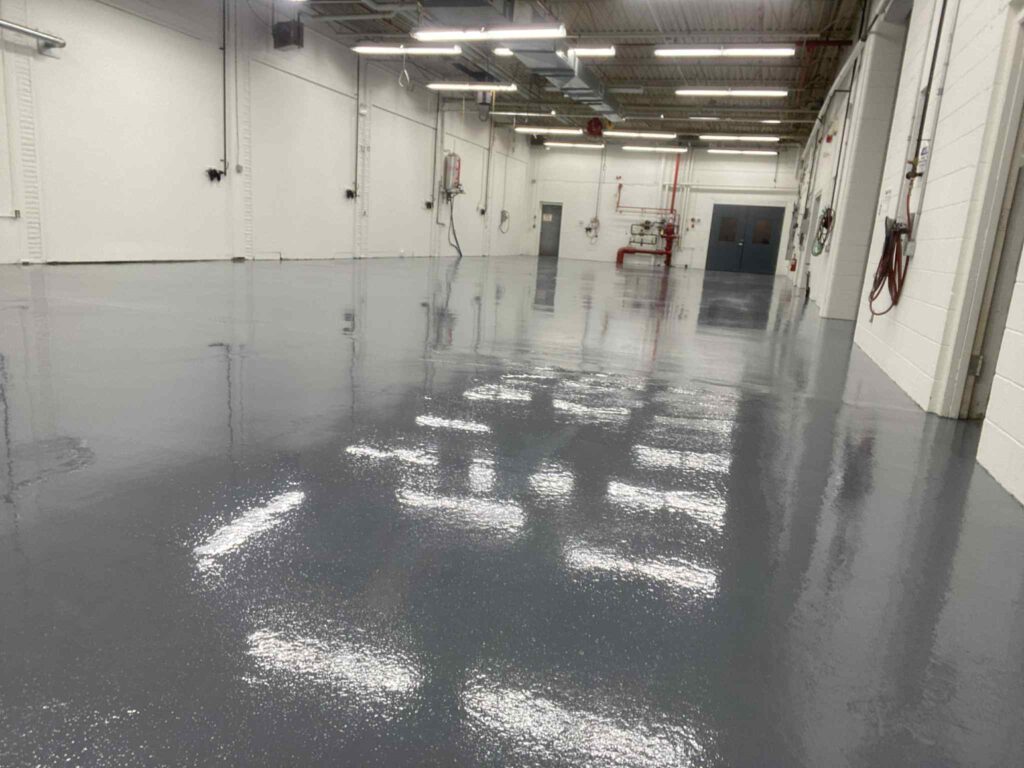
At Coastal Resin Resurface, polyaspartic is our go-to system for homes in Truro, New Glasgow and across the province — and here’s why.
What makes polyaspartic different?
Polyaspartic is an aliphatic polyurea: a flexible, fast-curing resin that bonds tightly to prepared concrete and stays flexible enough to move with the slab. Where rigid coatings crack under freeze-thaw stress, a quality polyaspartic floor coating flexes and holds.
Built for salt and moisture
Road salt is corrosive, and the brine that drips off your vehicle sits on the floor all winter. Polyaspartic forms a non-porous, chemical-resistant barrier that salt simply can’t penetrate, protecting the concrete below from the pitting and scaling that destroys untreated slabs.
Cures in the cold
Standard epoxy struggles below about 10°C and can take days to harden in a chilly garage. Polyaspartic cures in hours across a much wider temperature range, which means we can install year-round — including the cool spring and fall weeks when many products won’t set properly.
Handles the freeze-thaw cycle
Concrete moves constantly through a Nova Scotia winter. Each freeze-thaw cycle puts stress on the surface. Because polyaspartic stays slightly flexible, it absorbs that movement instead of fracturing — the key to a coating that still looks new after a decade.
The performance advantages at a glance
- UV-stable — no yellowing, even by sunny garage doors
- Resists road salt, oil, antifreeze and household chemicals
- One-day installation — park your car the next day
- Slip-resistant additives for icy-boot traction
- 15 to 20+ year lifespan with simple maintenance
Frequently asked questions
Is polyaspartic worth the extra cost over epoxy?
For Nova Scotia’s climate, yes. The longer lifespan and salt resistance usually make polyaspartic the better long-term value, even though the upfront price is slightly higher.
Will the coating crack if my garage isn’t heated?
No. Polyaspartic is designed for unheated, temperature-swinging spaces, which is why it suits Nova Scotia garages so well.
How do I keep a polyaspartic floor clean in winter?
Just rinse off salt and grit with water and a mop. The non-porous surface releases dirt easily.
Want a garage floor that shrugs off Nova Scotia winters? Get your free quote from Coastal Resin Resurface — serving Truro, New Glasgow, Halifax and the whole province. Call (902) 986-6900.