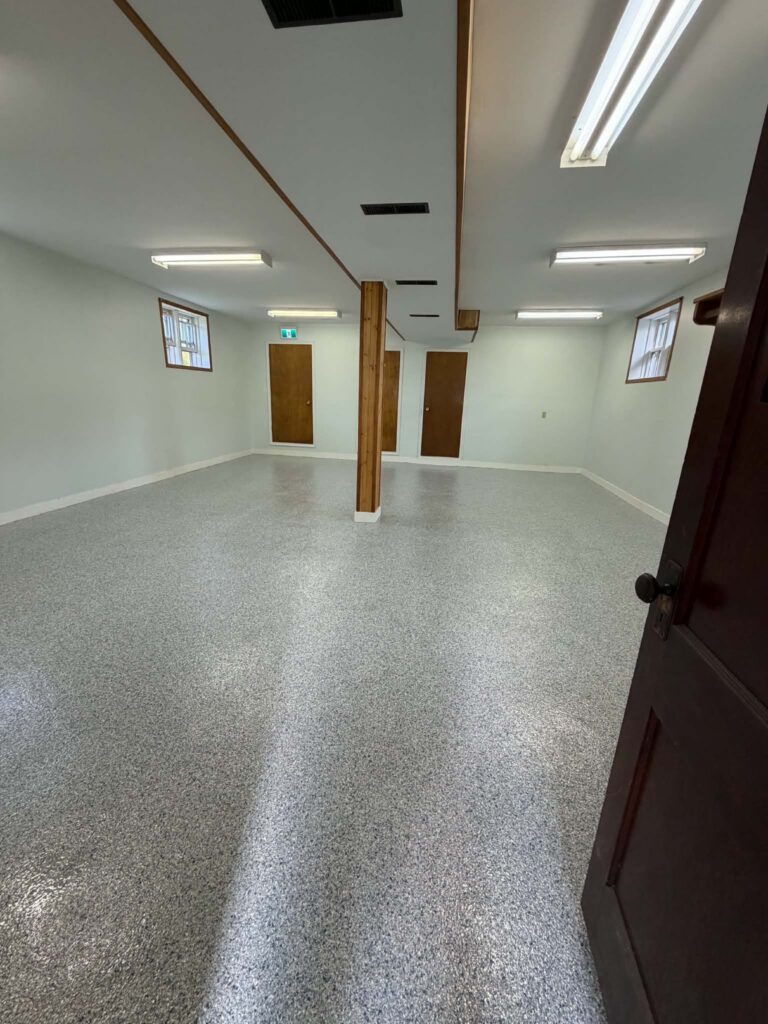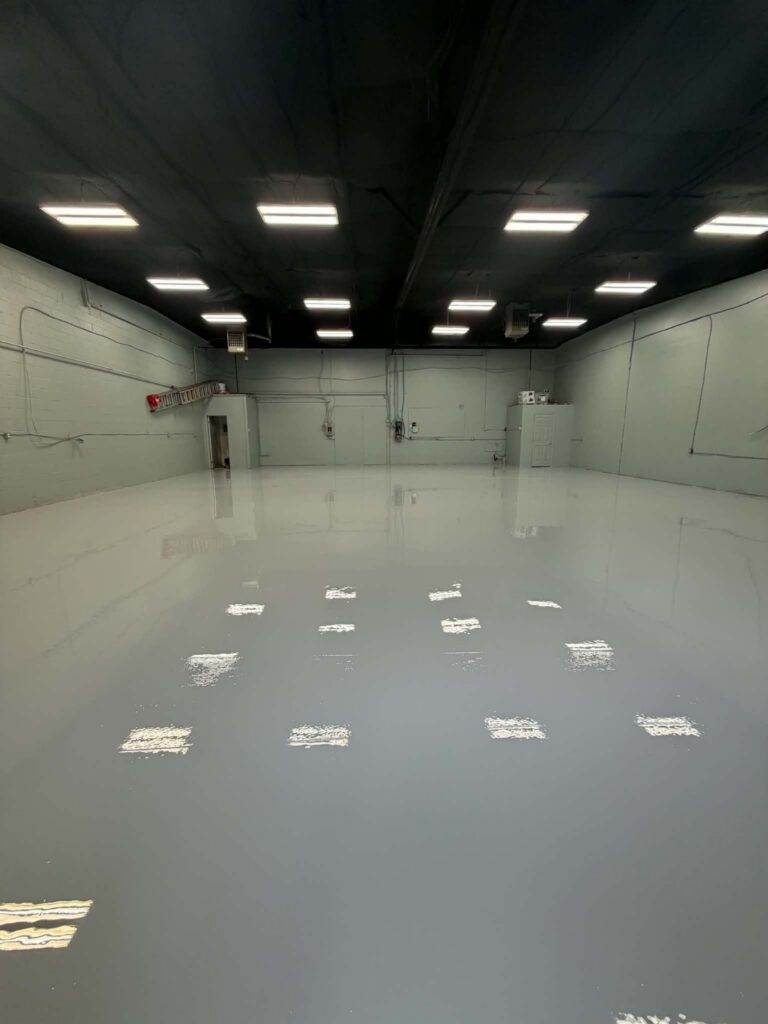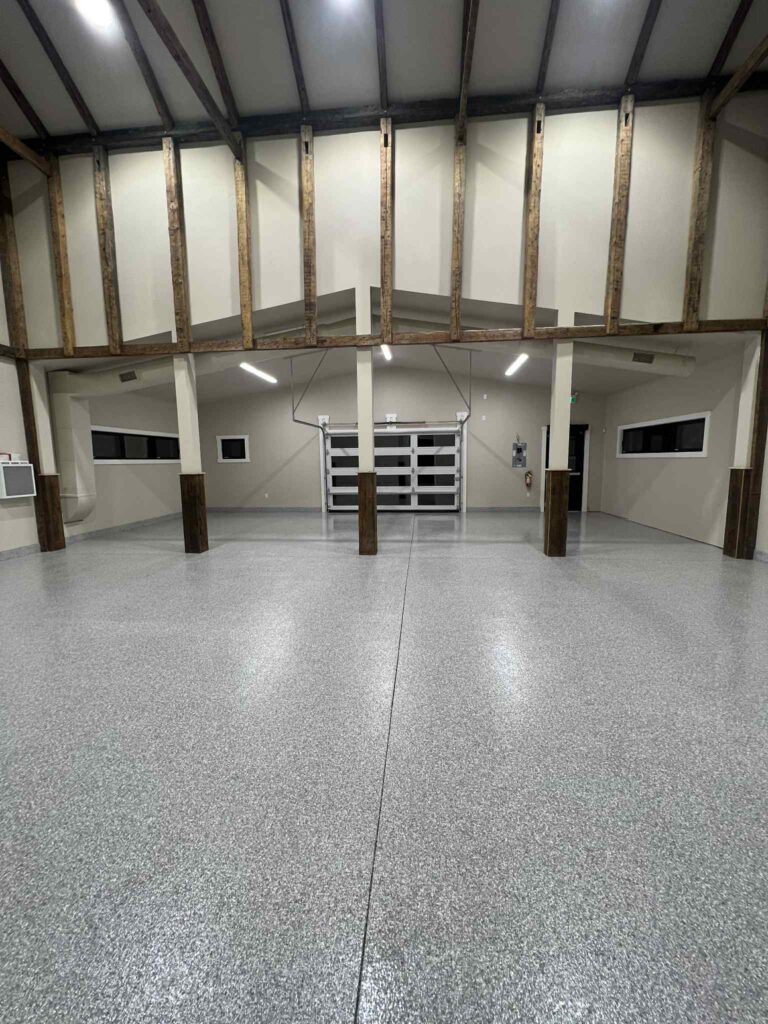
Commercial kitchen floors in Nova Scotia face one of the most demanding environments of any flooring application: constant moisture, grease, heat, heavy equipment, sharp object drops, and the relentless demands of the Nova Scotia Public Health Protection Act and federal food safety regulations. Choosing the wrong flooring in a commercial kitchen doesn’t just cost you in repairs — it can cost you your operating permit.
What Nova Scotia Health Regulations Require for Commercial Kitchen Floors
- Be smooth, non-absorbent, and easily cleanable
- Provide adequate slip resistance for worker safety
- Be free of cracks, crevices, or joints that can harbour bacteria
- Be resistant to the cleaning chemicals routinely used in commercial kitchens
- Be capable of withstanding heat, moisture, and daily deep cleaning
Unsealed concrete, ceramic tile with grout lines, and most vinyl flooring fails to fully meet these requirements in practice. Seamless epoxy and polyaspartic coatings check every box.
Why Seamless Epoxy Flooring Is the Gold Standard for Commercial Kitchens
No Grout Lines = No Bacterial Harborage
Tile grout lines are a persistent food safety problem. Grease, food particles, and bacteria accumulate in grout no matter how diligently staff clean. A seamless epoxy floor eliminates this entirely — the surface is continuous from wall to wall with no joints or seams.
Chemical and Grease Resistance
Commercial kitchens use aggressive degreasers, bleach-based sanitizers, and acidic cleaners daily. Our commercial-grade epoxy systems are specifically formulated to withstand these chemicals without degrading, staining, or becoming slippery.
Slip Resistance Configured for Kitchen Safety
We configure slip-resistant aggregates into our kitchen floor coatings based on your specific environment — more aggressive texture near dishwashing stations and mop sinks, smoother profiles in dry prep areas.
Common Problems We Fix in NS Restaurant Kitchens
- Cracked and stained grout lines in tiled kitchens — coated over with seamless system
- Absorbing and staining concrete in older commercial spaces
- Peeling or bubbling coatings from previous low-quality applications
- Uneven floors creating drainage problems and water pooling
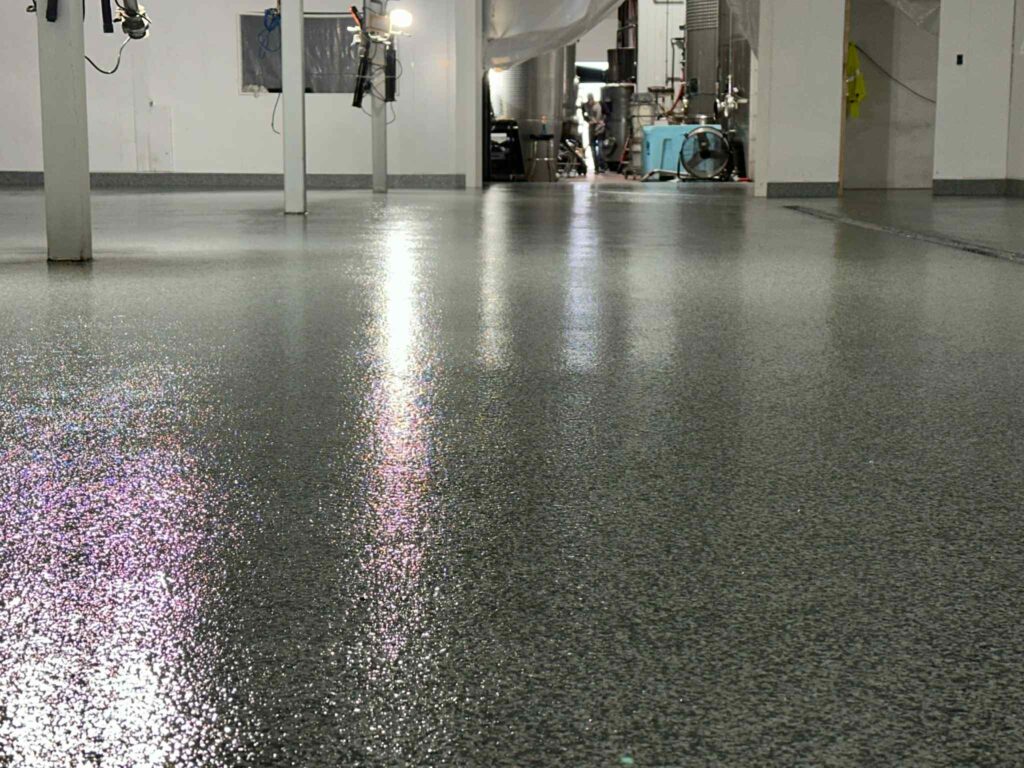
The Installation Process for Commercial Kitchens
- Free site assessment: We evaluate your kitchen layout, existing floor condition, and regulatory requirements
- Preparation: Surface grinding, crack repair, and moisture testing
- Application: Primer, base coat, and chemical-resistant topcoat with appropriate slip resistance
- Cure: Most commercial kitchens can be back in service within 48 to 72 hours
Frequently Asked Questions
Is epoxy flooring approved for commercial kitchens in Nova Scotia?
Yes. Seamless epoxy and polyaspartic floor coatings are widely accepted by Nova Scotia Public Health as compliant flooring for food preparation and service areas.
How long does commercial kitchen floor coating take?
Most commercial kitchens can be coated in 1 to 2 days depending on size and condition. The floor is typically ready for kitchen use within 48 to 72 hours of completion.
Can you install kitchen flooring without closing the restaurant?
In some cases, yes — particularly for large kitchens that can be sectioned. We work with you to find the least disruptive installation schedule.