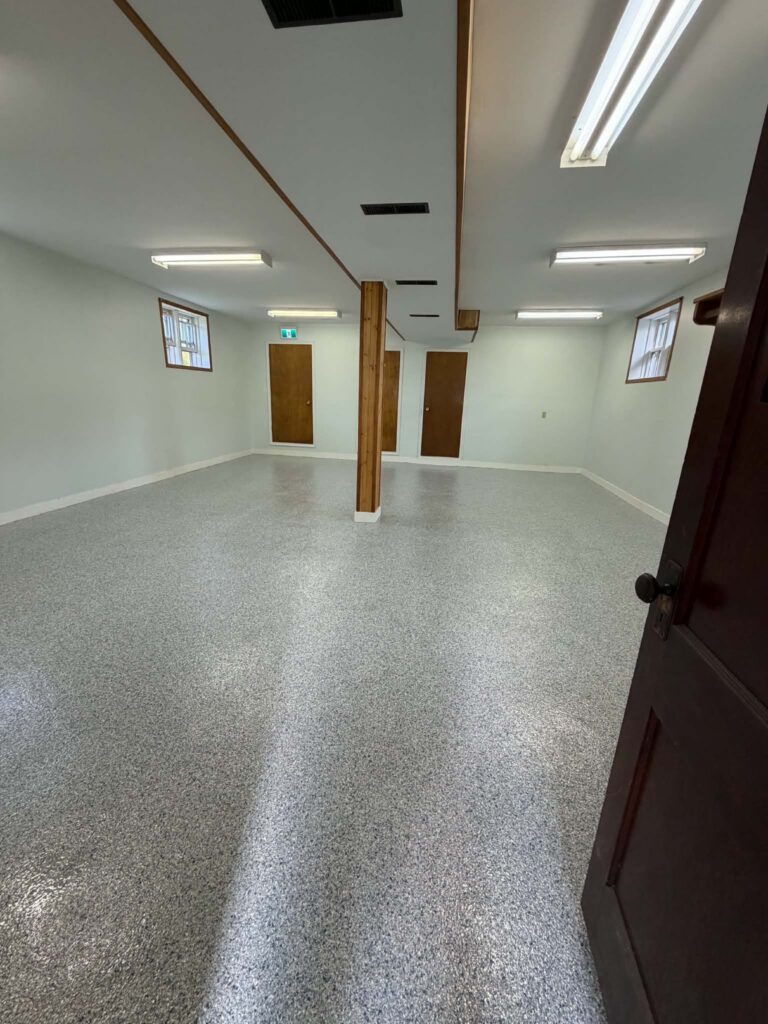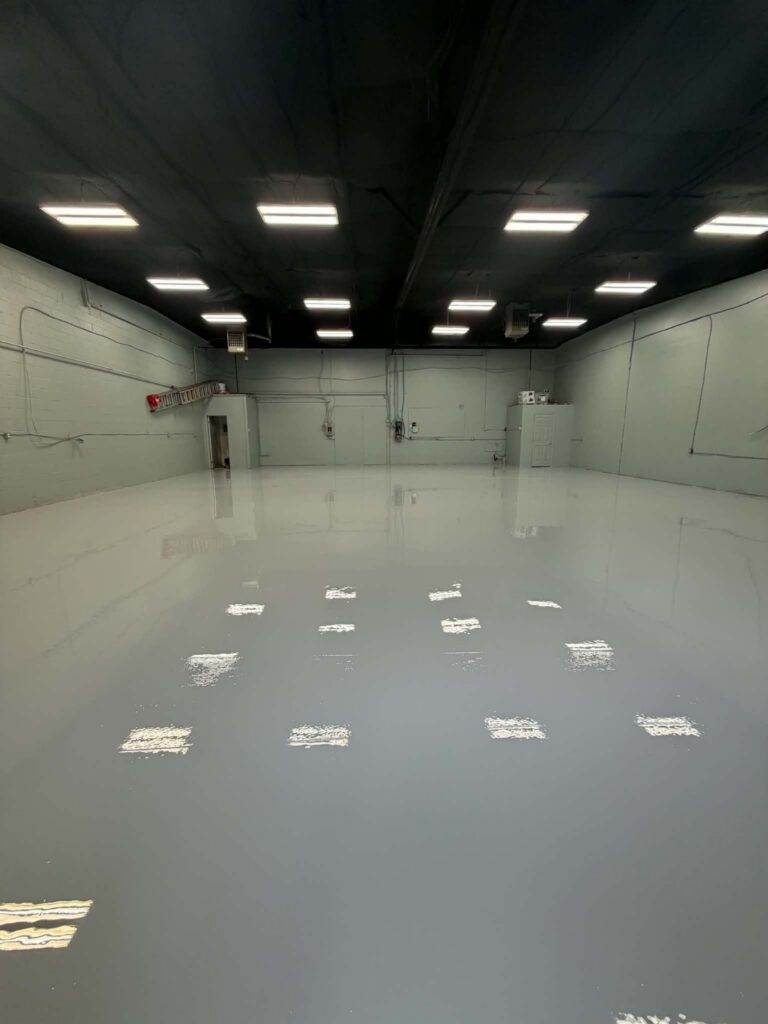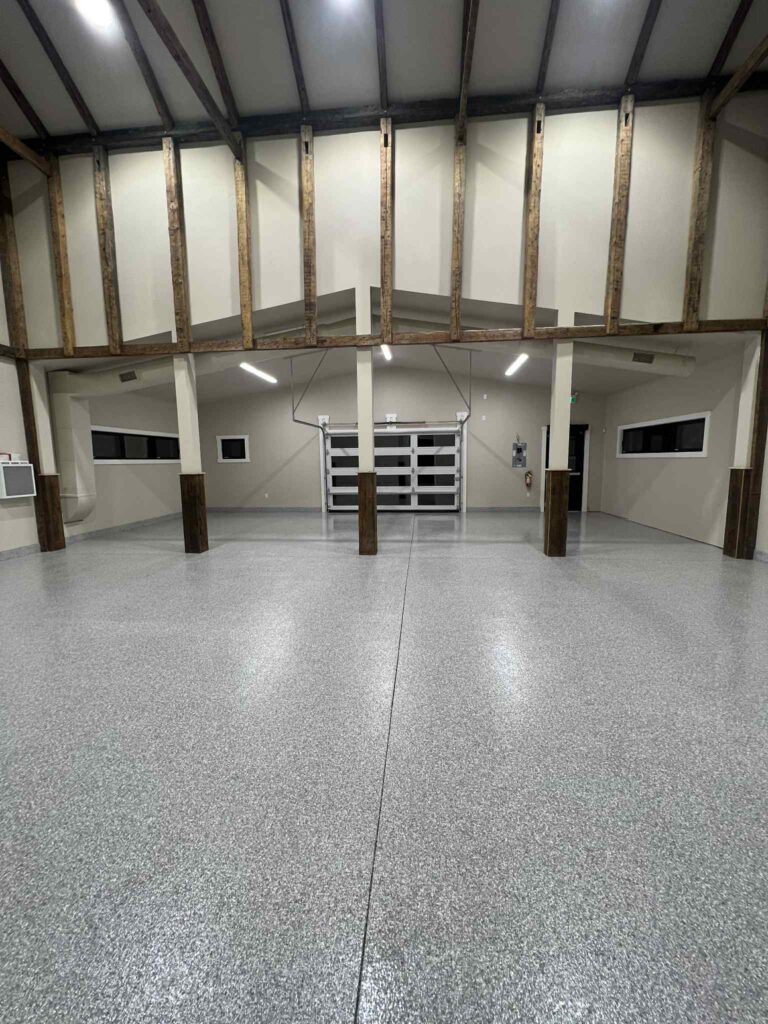
When you’re running a warehouse, distribution centre, or industrial facility in Nova Scotia, your floor is one of your most important business assets. It takes the constant impact of forklifts, pallet jacks, heavy foot traffic, and spills — day after day, year after year. Increasingly, Nova Scotia facility managers are discovering that polished concrete outperforms alternatives for industrial applications.
What Is Polished Concrete?
Polished concrete is the process of mechanically grinding a concrete floor to progressively finer grits using diamond-tipped tools, then densifying and sealing the surface. The result is a floor that is:
- Extremely hard and abrasion-resistant
- Highly reflective — improving ambient light levels
- Virtually dustless
- Resistant to oil, grease, and chemical spills
- Comfortable for workers to stand on for long periods
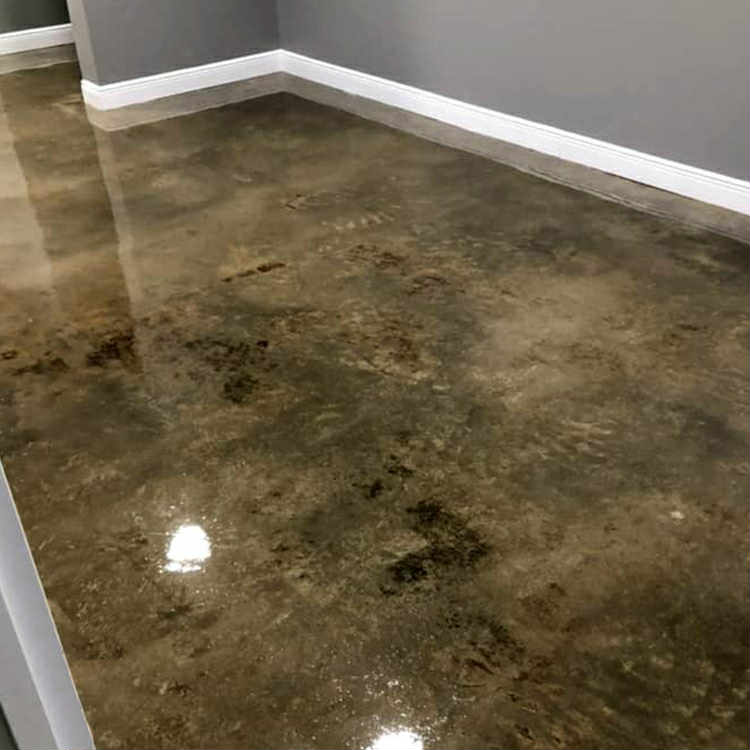
The Cost Advantage: Polished Concrete vs Alternatives
- Epoxy paint or paint systems: require reapplication every 3 to 5 years, often peel under forklift traffic
- Vinyl composition tile (VCT): expensive to install, easy to damage, requires waxing and stripping
- Uncoated concrete: generates concrete dust, stains easily, absorbs oil, deteriorates rapidly
- Polished concrete: upfront investment with minimal ongoing cost for 15 to 25 years
For a 10,000 sq ft warehouse in Dartmouth or Truro, the long-term savings from polished concrete versus alternatives can exceed $50,000 over 15 years when you account for reapplication, maintenance, and downtime.
Safety Benefits in NS Industrial Environments
- High reflectivity improves visibility in the warehouse — reducing accidents
- Slip-resistant finishes available for wet or oil-prone areas
- No raised tile edges or coating bubbles to trip on
- Easy to see and clean spills against the light-coloured surface
The Coastal Resin Resurface Polishing Process
- Step 1: Initial inspection and hardness assessment of your existing concrete
- Step 2: Coarse grinding to remove surface contamination and level imperfections
- Step 3: Progressive refinement through medium and fine grits
- Step 4: Chemical densifier application to harden the surface
- Step 5: Final polishing to your desired sheen level
- Step 6: Penetrating sealer for stain and moisture resistance
We work around your operational schedule to minimize downtime — section-by-section if needed.
Frequently Asked Questions
How long does it take to polish a warehouse floor in Nova Scotia?
A 5,000 sq ft warehouse floor typically takes 2 to 4 days. We work in phases to keep your operation running if needed.
Can polished concrete be applied to an existing warehouse floor?
Yes, in most cases. We assess the condition of your existing concrete slab. If it’s structurally sound, polishing is absolutely possible. Cracks and damage can be repaired prior to polishing.
Is polished concrete slippery in a warehouse environment?
Polished concrete has a similar slip resistance to polished tile when dry. We apply slip-resistant additives in areas prone to wet conditions such as loading docks and wash bays.
What maintenance does a polished concrete floor require?
Minimal. Regular dust mopping and occasional damp mopping with a neutral pH cleaner is all that’s needed. No waxing, stripping, or recoating required.
📞 Request a FREE commercial site assessment for your Nova Scotia warehouse or industrial facility. We serve Dartmouth, Truro, New Glasgow, Sydney, and all of NS. Call (902)-986-6900 or visit coastalresin.ca/contact