Introduction
Nova Scotia is not easy on concrete. From January ice storms to April mud season, Atlantic Canada puts floor surfaces through more stress in a year than most places experience in a decade. Road salt, humidity, freezing temperatures, and constant temperature swings create a perfect storm of concrete deterioration.
The question we hear most from homeowners and facility managers across the province is simple: will this coating actually hold up here? The answer is yes — but only if you choose the right coating system and install it correctly.
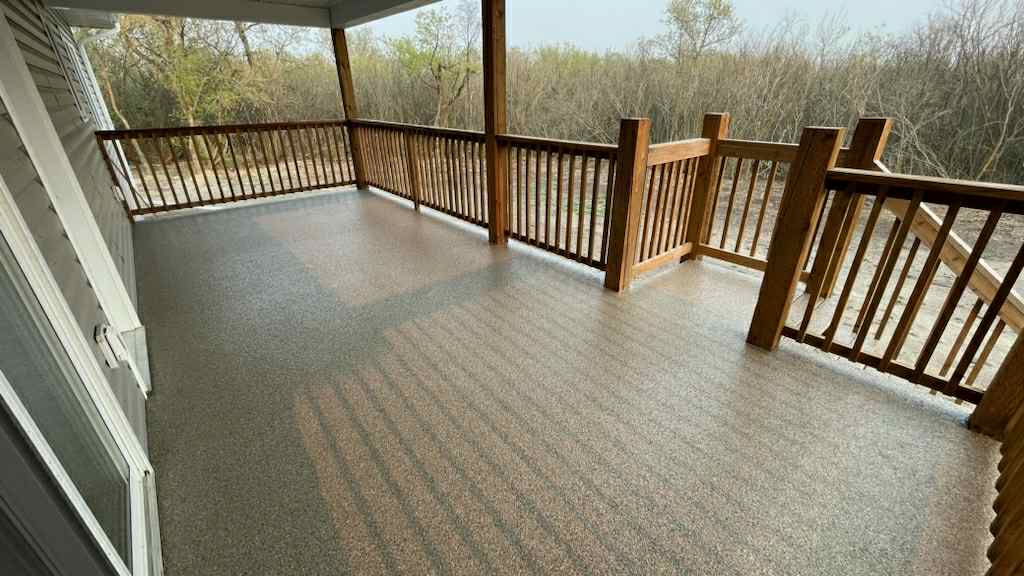
The Science of Freeze-Thaw Damage
Concrete is porous. When moisture seeps into those pores and freezes, it expands. When it thaws, it contracts. This cycle repeats dozens of times each Nova Scotia winter, and each cycle widens micro-cracks slightly. Over years, small surface cracks become structural ones. An unprotected concrete floor is fighting this battle constantly. A properly coated floor seals out moisture before it can infiltrate.
Why Standard Epoxy Has Limitations in NS
Standard epoxy coatings are excellent at sealing concrete and providing a hard, abrasion-resistant surface. But they have one significant weakness in our climate: thermal shock. Epoxy is relatively rigid. When temperatures swing dramatically — as they do in Nova Scotia — a rigid coating can delaminate, crack, or peel at the edges over time. This is especially common in garages where the door opens and closes during winter, causing rapid temperature changes at the floor surface.
Why Polyaspartic Coatings Excel in Atlantic Canada
- Higher elongation rating — the coating stretches slightly with the concrete instead of cracking
- Wider application temperature range — can be installed and cured in near-freezing conditions
- UV-stable chemistry — won’t yellow or degrade from Nova Scotia’s summer sun
- Salt and chemical resistance — critical for coastal and road-salt-exposed environments
How We Prepare Concrete for Maximum Adhesion
The coating is only as strong as the surface beneath it. This is where many contractors cut corners. Our preparation process includes:
- Diamond grinding or shot-blasting to open the concrete profile
- Crack repair and joint filling before coating
- Moisture testing to ensure the slab is ready
- Primer coat application to maximize bond strength
Proper preparation adds time upfront but dramatically extends the life of the coating — we’re talking 15 to 20+ years versus 5 to 7 years with a poorly prepared surface.
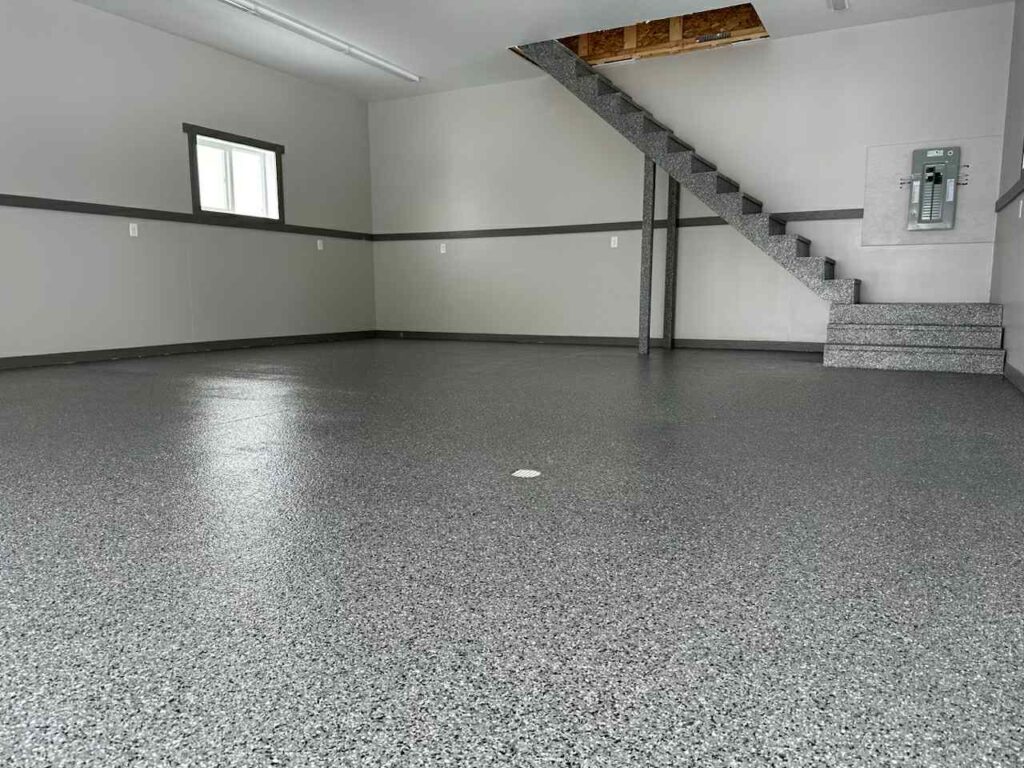
Tips for Maintaining Your Coated Floor in NS
- Sweep or dust mop regularly to prevent abrasive grit buildup
- Clean road salt spills promptly with warm water
- Avoid dragging sharp metal objects across the surface
- Use a pH-neutral floor cleaner for periodic deep cleaning
Frequently Asked Questions
Can epoxy or polyaspartic be installed in winter in Nova Scotia?
Polyaspartic coatings can be installed in temperatures as low as -20°C with the right formulation. Standard epoxy requires warmer conditions. We assess each project individually.
How long does a coated concrete floor last in Atlantic Canada?
A properly installed polyaspartic coating in a Nova Scotia garage or commercial space typically lasts 15 to 20 years. Longevity depends heavily on surface preparation and maintenance.
Will road salt damage my epoxy or polyaspartic floor?
Our coating systems are specifically formulated to resist salt and chemical penetration. Salt tracked in from boots and tires will not degrade the coating. Simply rinse or mop it up.
📞 Book a climate-ready floor assessment for your Nova Scotia home or business. Call (902)-986-6900